
Here is the latest news from Powersoft.


3rd June 2026
AI is fast becoming core to software development, but ungoverned use creates real security, IP and GDPR risk. Governance has to come first.
AI Is Transforming Development — But Not Without Risk
AI is rapidly becoming a core part of modern software development. As models improve, the opportunities to integrate AI into your workflow grow just as quickly. Developers are already using AI tools for code generation, refactoring, and even building entire sub‑modules; often without formal approval or oversight.
How AI Is Being Used Today
Even without a corporate strategy, AI usage emerges organically. Developers experiment with different models, often using personal or free accounts. This leads to:
• ad‑hoc code generation
• global source code modifications
• AI‑generated micro‑services and components
• unregulated uploads of source code to external models
These behaviours are not malicious, they are driven by curiosity and productivity. But they introduce significant risk.
The Hidden Security and Legal Exposure
Imagine a developer working on a client upgrade. They upload a core module to a free AI model hosted outside the UK. The model’s terms allow training on user prompts, and no GDPR protections apply. In a single action, the developer has:
• exposed the client’s intellectual property
• breached GDPR through international data transfer
• violated the NDA
• potentially invalidated professional indemnity insurance
From a legal standpoint, the organisation is severely exposed; and may never know it happened.
Developers Aren’t the Problem — Governance Is
Developers focus on solving problems, not on GDPR, IP law, or data residency. It is management’s responsibility to provide safe tools, set boundaries, educate staff, and enforce policy. Creativity should be encouraged, but within a controlled and compliant environment.
How to Secure AI Usage in Your Organisation
To regain control and protect both your IP and your clients, organisations need a clear and enforceable AI governance framework.
• provide corporate AI accounts (e.g., Copilot with EU boundary, Claude with EU residency)
• ban personal and free AI accounts for work
• implement a formal AI usage policy
• use vendors with DPAs, SCCs, and no‑training guarantees
• monitor and audit AI usage
• educate developers on risks and responsibilities
Without these controls, AI usage becomes impossible to manage.
Can You Prove an AI Model Isn’t Leaking Data?
This is the hardest question and the reason enterprise AI exists. You cannot “prove” a model isn’t leaking data. You can only rely on contractual guarantees, technical controls, data residency, isolation of prompts, no‑training commitments, and independent audits. Free AI tools provide none of these.
Final Thought: Governance First, Cost Control Next
AI is transforming software development faster than any technology in the last two decades. The productivity gains are real, but so are the risks and increasingly, the costs.
Enterprise AI accounts are not cheap. Most charge by usage, and when a developer throws an entire system at a model just to modify a small section, the processing bill can be substantial. Once governance is solved, controlling cost becomes the next frontier.
Without clear limits, AI can quietly inflate your cloud spend, especially when models are used for large‑scale code analysis or generation. The organisation must therefore treat AI usage like any other resource: monitored, budgeted, and optimised.
The organisations that thrive will be those that embrace AI while maintaining strong governance, protecting their IP, and managing cost.
AI is not the problem, unregulated and uncontrolled AI is.
5th May 2026
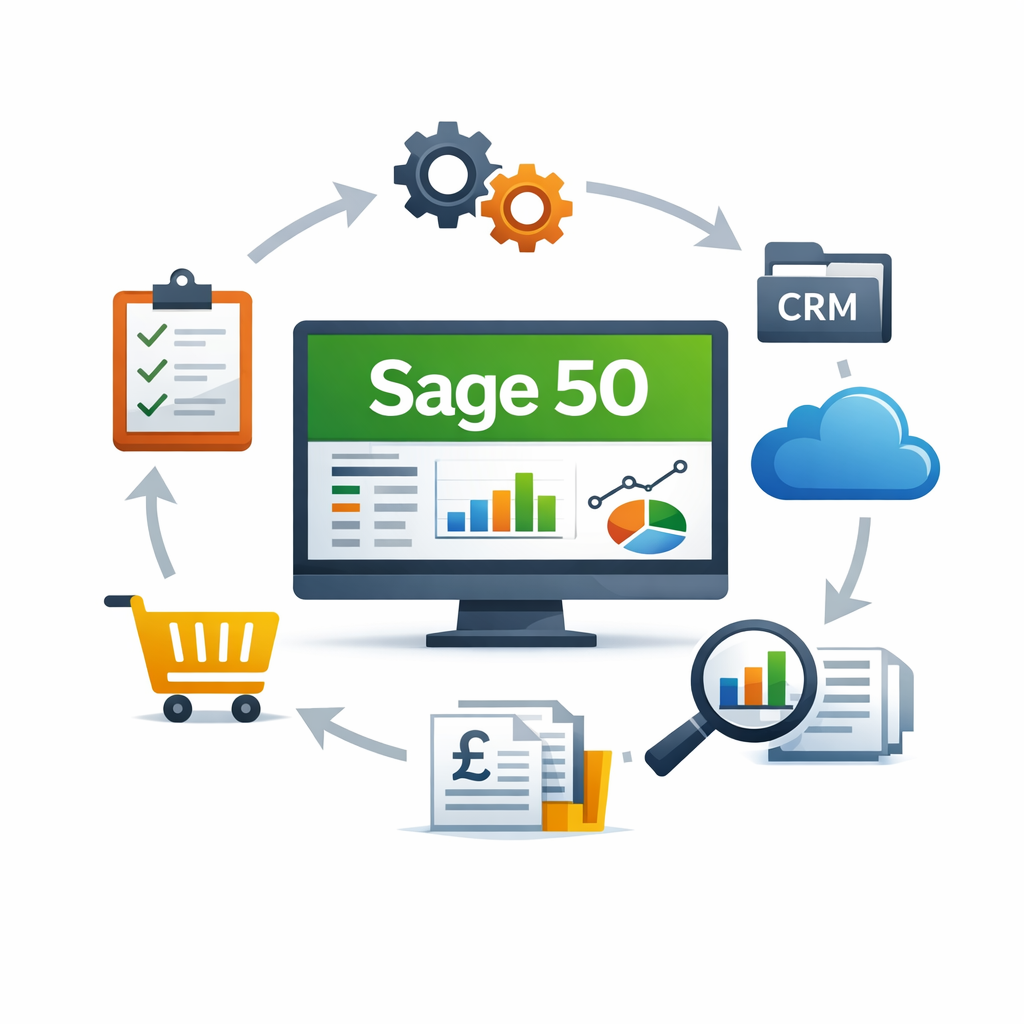
How a bespoke, end-to-end platform helped Klapton Insurance replace fragmented spreadsheets and manual reconciliation with one workflow that feeds cleanly into Sage 50 Accounts.
The Problem: When Standard Insurance Systems Can’t Keep Up
Insurance and reinsurance operations are some of the most data intensive and compliance sensitive processes in any industry. For years, many insurers have relied on a patchwork of spreadsheets, manual workflows, and ageing software to keep things moving. It works until it doesn’t.
Klapton Insurance reached this point. Their underwriting, policy accounting, bordereaux management, and reinsurance calculations had become too complex for the tools they were using. They also relied on Sage 50 Accounts for financial reporting, which meant that every operational process eventually had to be reconciled back into Sage. This created duplication, delays, and a growing risk of inconsistency.
Processes were fragmented, data lived in multiple places, and operational risk was increasing. Every month required manual reconciliation. Every quarter meant a scramble to produce accurate reports. Every system change introduced new fragility.
The business wasn’t failing. The systems were. They simply couldn’t keep up with the scale, complexity, and regulatory expectations of a modern insurer.
Why It Happens: Insurance and Reinsurance Are Too Complex for Off the Shelf Software
Most generic insurance platforms are built around simplified assumptions. They expect linear workflows, fixed product structures, and predictable accounting rules. Real world insurance rarely behaves that neatly.
Underwriting rules vary by product, region, and risk appetite. Policy accounting requires precise handling of premiums, commissions, fees, and adjustments. Reinsurance introduces layers of proportional and non proportional treaties, recoveries, and exposure calculations. Regulatory reporting demands accuracy, auditability, and consistency.
Off the shelf systems struggle because they are designed for the average insurer rather than the specific one. When a business has unique products, bespoke underwriting rules, or complex reinsurance structures, the software bends. Eventually it cracks. The business then ends up relying on spreadsheets, manual workarounds, and duplicated data.
This becomes even more challenging when the finance team depends on Sage 50 Accounts. Without a clean integration path, operational data must be re entered or manually transformed before it can be used for financial reporting.
This is the point where bespoke development becomes not just beneficial but necessary.
The Solution: A Bespoke, End to End Insurance and Reinsurance Platform
Klapton needed a system that matched the reality of their operations and integrated cleanly with Sage 50 Accounts. Working closely with their underwriting, finance, and compliance teams, we designed and delivered a fully integrated platform that handles the complete insurance and reinsurance lifecycle while feeding accurate, reconciled data directly into Sage.
The system brings together underwriting, policy creation, bordereaux processing, premium and commission accounting, reinsurance treaty management, automated recoveries, exposure calculations, financial reporting, and full audit trails.
Instead of multiple disconnected tools, everything now sits within a single coherent workflow. Data flows cleanly from underwriting to accounting to reinsurance without re keying or manual intervention. The platform enforces business rules, ensures accuracy, and provides the transparency regulators expect. Most importantly, it produces financial data that integrates directly with Sage 50 Accounts, removing the need for manual reconciliation.
This was not a replacement for their business. It was an extension of it.
Practical Example: From Fragmented Processes to a Single Integrated Workflow
Before the new system, a single policy could touch five different spreadsheets, two legacy tools, and several manual approval steps. Reinsurance calculations were performed separately and then reconciled back into the accounts. Every adjustment required multiple updates. Every error created a chain reaction. The finance team then had to translate all of this into Sage 50 Accounts, often by hand.
With the bespoke platform, underwriters create policies directly in the system. Premiums, fees, and commissions are calculated automatically. Bordereaux uploads populate exposure and accounting data instantly. Reinsurance treaties are applied without manual intervention. Recoveries and liabilities are generated accurately and consistently. Finance receives clean, reconciled data that flows directly into Sage 50 Accounts.
What once took days now takes minutes. What once required manual oversight now happens reliably and repeatably. Because the system reflects Klapton’s actual business rules and integrates with their accounting platform, it behaves exactly as their teams expect.
Risks and Pitfalls: What Goes Wrong When Insurance Systems Are Stretched Too Far
Insurance operations are unforgiving. Small errors compound quickly, and manual processes introduce risk at every step. The most common pitfalls include reliance on spreadsheets for core accounting, using generic systems for complex reinsurance, building processes around system limitations, duplicating data across multiple tools, lacking audit trails for regulatory reporting, and depending on a single individual who “knows how it all works”.
These issues do not appear overnight. They accumulate slowly until the business reaches a tipping point. By the time symptoms are visible, the underlying system is already under strain.
A bespoke platform avoids these pitfalls by aligning the system with the business and ensuring that operational data flows cleanly into Sage 50 Accounts without manual intervention.
When to Build Bespoke and When to Buy Off the Shelf
Not every insurer needs a bespoke system. Some absolutely do. The decision comes down to scale, complexity, and operational fit.
Build bespoke when: • underwriting or reinsurance rules are unique • products do not fit standard templates • spreadsheets or manual reconciliation are essential to daily operations • processes span multiple disconnected systems • regulatory reporting requires precision and auditability • operational risk is increasing due to system limitations • the finance team relies on Sage 50 Accounts and needs clean, structured data
Buy off the shelf when: • products are standard and low complexity • processes match industry defaults • rapid deployment is more important than flexibility • the operational model is stable and predictable
Most insurers fall somewhere in the middle. For them, a bespoke system provides the flexibility they need today while creating a stable foundation for future growth.
How We Help: Building Systems That Match the Reality of Insurance Operations
Our approach is simple. We understand the business first, then design the smallest and cleanest solution that delivers the biggest operational impact.
For Klapton, that meant building an end to end platform that reflects their underwriting rules, automates their accounting, handles their reinsurance structures, eliminates manual reconciliation, provides complete auditability, and integrates directly with Sage 50 Accounts.
We do not try to turn insurers into software companies. We build systems that let them operate with confidence, accuracy, and efficiency without forcing them into a mould that does not fit.
16th April 2026
Sage 50 is a dependable accounting engine, but growing businesses often need bespoke extensions for workflow, reporting and integrations rather than a costly move to Sage 200 or a full ERP.
The Problem: Sage 50 Works Well… Until Your Business Outgrows It
Sage 50 is excellent at what it was designed for: dependable accounting, straightforward bookkeeping, and a familiar workflow that many businesses have relied on for years. The trouble starts when the business evolves but Sage stays the same. Processes become more complex, reporting needs become more demanding, and teams begin relying on spreadsheets, manual workarounds, or duplicated data just to keep things moving.
The symptoms are easy to spot. SOP workflows that once felt simple now involve multiple approvals, custom pricing rules, or document packs that Sage can’t generate. Reporting becomes a weekly battle, with managers exporting data into Excel because the built‑in report designer can’t produce the views they need. Integrations with CRM, quoting systems, or job costing tools rely on manual re‑keying or brittle third‑party add‑ons that break during upgrades.
None of this means Sage 50 is failing. It simply means the business has grown beyond the boundaries of what Sage 50 was ever intended to do. The accounting engine is still solid; but the operational reality around it has become more demanding, more interconnected, and more dependent on accurate, real‑time data.
At this point, businesses face a familiar dilemma: either live with the inefficiencies, or consider a costly jump to Sage 200 or a full ERP. But for many organisations, neither option feels right. They don’t want to replace a system that still works perfectly well for accounts. They just need Sage to fit the way they work, not the other way around.
That’s where bespoke Sage development becomes the missing piece. Extending Sage 50 so it supports the business as it is today, not as it was when the system was first installed.
Why It Happens: Sage 50 Was Built for Accounting, Not Operations
The limitations businesses run into with Sage 50 aren’t flaws, they’re design decisions. Sage 50 was built as an accounting system first and foremost, and it excels at that job. But as soon as a business starts asking Sage to behave like a workflow engine, a CRM, a job costing system, or a reporting platform, the cracks begin to show.
At its core, Sage 50’s database structure is optimised for financial accuracy, not operational flexibility. The SOP and POP modules follow fixed, linear processes that work well for straightforward order handling but struggle when businesses introduce multi‑stage approvals, custom pricing rules, or document packs that need to be generated automatically. These workflows simply weren’t part of the original design.
Reporting is another common pressure point. The built‑in report designer is powerful within its boundaries, but those boundaries are narrow. It expects numeric ordering, fixed groupings, and predefined data relationships. The moment a business needs cross‑module reporting, KPI dashboards, or anything resembling a management view, Sage 50’s reporting engine becomes restrictive. Forcing teams into Excel or manual workarounds.
Integrations are where the limitations become most visible. Sage 50 was never intended to sit at the centre of a connected ecosystem. It doesn’t offer modern APIs, and many integrations rely on file exports, scheduled imports, or third‑party tools that can be fragile during upgrades. As businesses adopt CRM systems, quoting tools, web portals, or job costing platforms, the need for reliable, real‑time data exchange becomes critical and Sage 50 simply doesn’t provide the plumbing.
All of this leads to a simple truth: Sage 50 is excellent at accounting, but it isn’t designed to run an entire business. When companies try to stretch it beyond its intended scope, they hit predictable limits. Not because Sage 50 is outdated, but because it was built with a clear purpose and modern businesses often need more than that purpose allows.
The Solution: Bespoke Sage Development That Fits the Way Your Business Works
The good news is that you don’t need to replace Sage 50 to overcome these limitations. The accounting engine is solid, familiar, and trusted. It just needs the right extensions around it. Bespoke Sage development fills the gap between what Sage 50 was designed to do and what your business actually needs to operate efficiently.
Instead of forcing your processes into Sage’s fixed workflows, bespoke development adapts Sage to match your real‑world operations. That might mean adding a multi‑stage approval process to SOP, building a custom pricing engine, or generating document packs automatically at the right point in the workflow. These enhancements sit alongside Sage 50, not inside it, so they remain stable across upgrades and don’t interfere with the core accounting logic.
Reporting is another area where bespoke development makes an immediate impact. Rather than wrestling with the built‑in report designer, you can have tailored reports that combine data from multiple modules, present information in the order you need, and deliver the KPIs that matter to your business. Whether it’s a dashboard, a management pack, or a cross‑module analysis, custom reporting removes the weekly Excel struggle and gives decision‑makers the clarity they’ve been missing.
Integrations are where bespoke development often delivers the biggest return. By connecting Sage 50 to your CRM, quoting system, job costing platform, or web portal, you eliminate manual re‑keying and ensure that data flows cleanly between systems. This creates a single, consistent source of truth — with Sage 50 continuing to handle the accounting while other systems manage the operational detail.
The result is a business solution that feels joined‑up, efficient, and tailored to your needs, without the cost or disruption of moving to Sage 200 or a full ERP. You keep the system your team knows, while gaining the flexibility and automation your business has grown to require.
Bespoke Sage development doesn’t replace Sage 50 - it completes it.
Practical Example: When a Standard SOP Workflow Isn’t Enough
A manufacturing client recently came to us with a familiar problem. Their sales team used a quoting system to build complex, multi‑line proposals with custom pricing rules, optional components, and bundled discounts. Once a quote was approved, the details had to be re‑entered manually into Sage 50’s Sales Order Processing module — a slow, error‑prone process that often resulted in mismatched pricing, missing lines, or incorrect stock allocations.
Sage 50 wasn’t the issue. Its SOP module worked exactly as designed. The problem was that the business had outgrown the simple, linear workflow Sage expected. They needed a multi‑stage approval process, automated document generation, and a reliable way to transfer data from their quoting system into Sage without re‑keying.
A bespoke Sage development solved the problem cleanly.
We built a custom integration that pulled approved quotes directly into Sage 50, applied the correct pricing rules, created the SOP order automatically, and generated the required document pack; all without the sales team touching Sage. The workflow became faster, more accurate, and completely aligned with how the business actually operated.
The impact was immediate. Order processing time dropped from hours to minutes. Pricing errors disappeared. Stock levels became more reliable. And because Sage 50 remained the accounting engine, the finance team didn’t have to change a thing.
This is the value of bespoke Sage development: not replacing Sage, but extending it so it fits the business rather than forcing the business to fit the software.
Risks & Pitfalls: What to Watch Out For With Bespoke Sage Development
Bespoke Sage development can transform the way a business operates, but it isn’t a magic switch. Like any tailored solution, it needs to be approached with care. The risks aren’t in the technology itself; they’re in the assumptions businesses sometimes make when extending Sage 50 beyond its original scope.
One of the most common pitfalls is over‑customisation. When every edge case becomes a feature request, the solution can grow into something more complex than the business actually needs. The goal of bespoke development is to streamline processes, not recreate an entire ERP inside Sage 50. A disciplined approach focusing on the changes that deliver real operational value keeps the solution maintainable and cost‑effective.
Integrations can also introduce risk if they’re not designed with Sage’s upgrade path in mind. Sage 50 doesn’t offer modern APIs, so integrations often rely on controlled access to the underlying data. If this isn’t handled carefully, a Sage upgrade can break the connection. Well‑designed integrations avoid this by sitting alongside Sage rather than inside it, ensuring stability even as Sage evolves.
There’s also the question of fit. Some businesses reach a point where Sage 50 simply isn’t the right platform anymore. If stock management is highly complex, if multiple warehouses are involved, or if the business needs deeper operational control, a move to Sage 200 or a full ERP may be the better long‑term choice. Bespoke development can extend Sage 50 significantly, but it shouldn’t be used to paper over structural needs that really require a larger system.
Finally, poor documentation is a hidden risk. Customisations that work perfectly today can become difficult to support if the original developer disappears or if the business changes direction. Clear documentation and clean architecture ensure that bespoke solutions remain stable, supportable, and future‑proof.
Handled well, bespoke Sage development is low risk and high reward. The key is knowing where to extend Sage and where not to.
When to Customise vs. When to Upgrade
Bespoke Sage development can take Sage 50 a long way, but it isn’t the answer to every problem. The key is knowing when extending Sage 50 is the most efficient route and when the business has genuinely outgrown the platform. The decision isn’t about features alone; it’s about scale, complexity, and long‑term fit.
Customise Sage 50 when:
• The accounting engine still works well and the finance team is comfortable with Sage 50
• Only 10–40% of your workflow is missing, and targeted enhancements would remove the bottlenecks
• Reporting is the main pain point, and better visibility would unlock faster decisions
• You rely on other systems (CRM, quoting, job costing) and need clean, reliable integrations
• Your team wants continuity, not a disruptive system replacement
• The business is growing, but not yet at the scale where Sage 200 or an ERP is justified
Upgrade to Sage 200 or ERP when:
• Stock management is complex, with multiple warehouses, batch tracking, or advanced BOM requirements
• Operational processes are too large or varied to be handled by extensions alone
• Performance is becoming an issue, especially with large transaction volumes
• Multiple departments need deeper functionality than Sage 50 can realistically support
• You’re planning significant growth, and the business needs a platform that can scale with it
The middle ground: extend now, plan for later
Many businesses fall into a hybrid category: Sage 50 works today, but the business is evolving. In these cases, bespoke development can stabilise and streamline operations now, while giving the organisation time to plan a future upgrade on its own terms — not under pressure.
The goal is always the same: choose the path that supports the business, not the software.
How We Help
We specialise in extending Sage 50 so it supports the way your business really works. For some organisations, that means building a custom SOP workflow or adding the reporting they’ve been struggling to produce for years. For others, it’s about integrating Sage with CRM, quoting, job costing, or operational systems so data flows cleanly without re‑keying or duplication.
Our approach is always the same: understand the business first, then design the smallest, cleanest solution that delivers the biggest operational impact. We don’t try to turn Sage 50 into something it was never meant to be. Instead, we build focused, reliable extensions that sit alongside Sage, remain stable through upgrades, and give you the flexibility you’ve been missing.
Whether you need a single workflow enhancement, a reporting engine, or a complete set of integrations, bespoke Sage development lets you keep the accounting system your team knows while gaining the functionality your business now depends on. It’s a practical, low‑disruption way to modernise your operations without committing to a full ERP.
7th April 2026
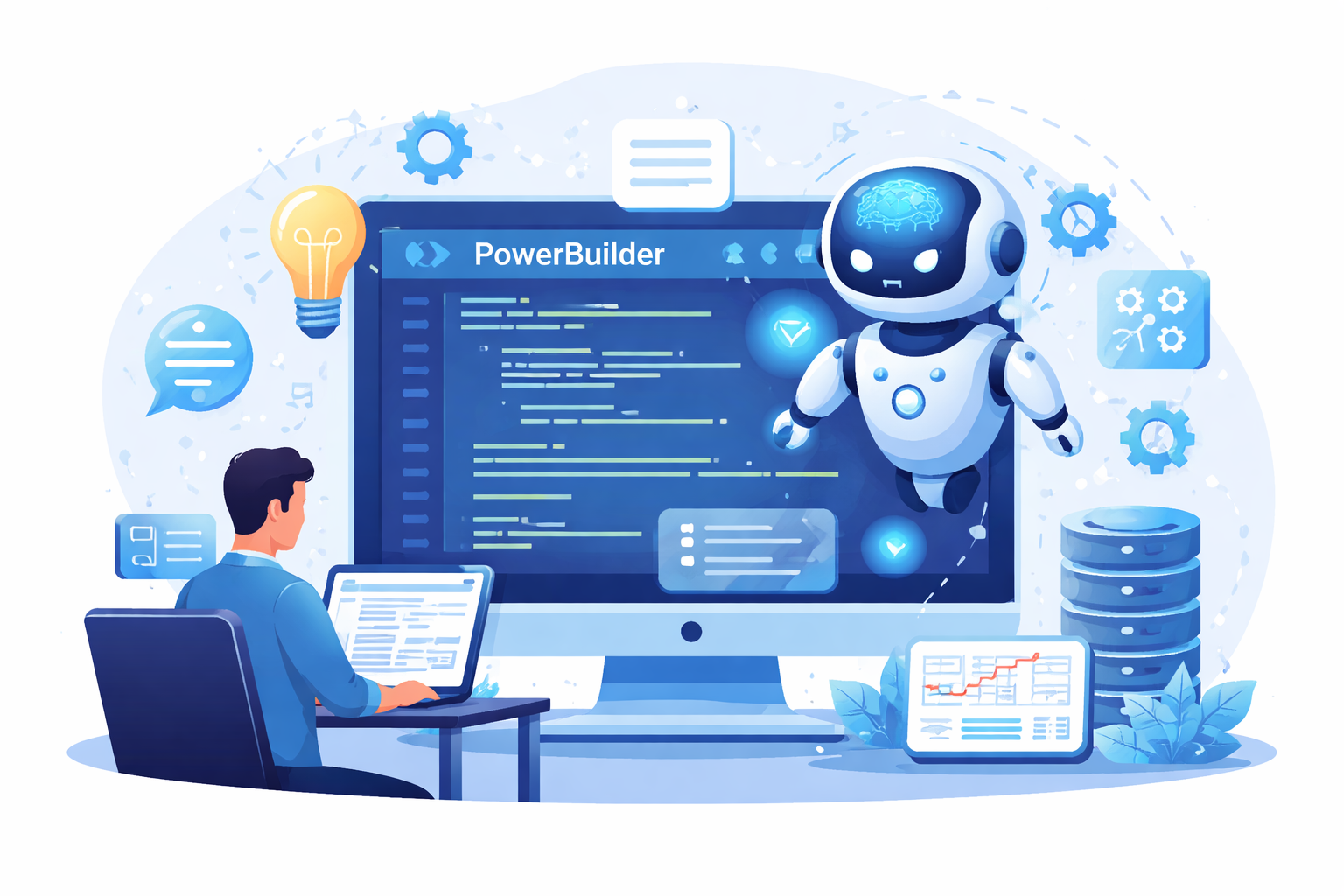
Practical ways AI is speeding up PowerBuilder development, supporting modernisation and improving code quality - used as an assistant to experienced developers, not a replacement.
Using AI to Enhance PowerBuilder Development: Practical Opportunities and Real-World Benefits
With over four decades in IT, I’ve seen development tools evolve from low-level programming to highly visual, rapid application environments. One platform that has stood the test of time is PowerBuilder—valued for its stability, productivity, and strong database integration. Today, a new evolution is underway: the integration of Artificial Intelligence into the development workflow. Rather than replacing developers, AI is proving to be a powerful assistant—especially in established environments like PowerBuilder, where maintaining and modernising legacy systems is often a priority.
Accelerating Development and Maintenance
AI tools can significantly speed up routine development tasks. Whether it’s generating PowerScript code, suggesting syntax improvements, or helping refactor older code, AI reduces the time spent on repetitive work. For teams maintaining large, long-standing PowerBuilder applications, this can be a game changer. AI can also assist in understanding legacy codebases. By analysing existing scripts and objects, it can provide explanations, highlight dependencies, and suggest improvements—something that traditionally takes considerable developer time.
Supporting Modernisation Efforts
Many organisations are looking to modernise their PowerBuilder applications—whether through UI updates, API integration, or migration to newer architectures. AI can support this by:
* Recommending modern design patterns
* Assisting with code conversion or restructuring
* Helping integrate RESTful services and external APIs
* Generating documentation for legacy systems
This allows development teams to move forward with greater confidence and efficiency.
Improving Quality and Reducing Errors
AI can act as an additional layer of review, identifying potential bugs, inefficiencies, or security concerns before they become issues. It can also help enforce coding standards and consistency across teams, which is particularly valuable in long-lived applications with multiple contributors over time.
Enhancing Developer Productivity
One of the most immediate benefits is productivity. Developers can focus more on solving business problems and less on boilerplate code or troubleshooting common issues. AI-powered assistants can provide instant answers, code suggestions, and even alternative approaches; effectively acting as a knowledgeable second pair of eyes.
Practical Considerations
While the benefits are clear, AI should be used thoughtfully. It’s important to:
* Validate AI-generated code before deployment
* Ensure security and data privacy when using external AI tools
* Maintain developer oversight and accountability
* Use AI as a support tool, not a replacement for experience and judgement
Looking Ahead
PowerBuilder continues to be a reliable platform for business-critical applications, and AI offers a practical way to extend its lifespan and capabilities. By embracing AI as part of the development toolkit, organisations can improve efficiency, reduce technical debt, and modernise with less risk.
From my perspective, AI is simply the latest tool in a long line of innovations. One that, when used correctly, can deliver real value without disrupting the foundations that systems like PowerBuilder are built on.

2nd April 2026
Reflecting on four decades of Powersoft's growth, partnerships and craftsmanship, and looking ahead to the next chapter.
Reaching 40 years in the software industry isn’t just a milestone it’s a story.
A story of persistence, partnership, and a belief that technology should solve real problems, not create new ones.
Back in 1986, Powersoft began as a small, determined team with a simple mission: help organisations work smarter. Four decades later, that mission still drives us. What has changed is the scale of the journey. Today, we support clients across the UK, the US, New Zealand, and South Africa, delivering systems that streamline operations, modernise legacy processes, and stand the test of time.
If there’s one thing that has shaped our success, it’s the relationships we’ve built. Long‑term partnerships have always mattered more to us than quick wins. We’ve grown by listening carefully, solving the problems that actually matter, and doing things properly. Even when that takes more effort. Our technical foundations have evolved with every era of software development, but our values haven’t. We still believe in craftsmanship. We still believe in clarity. And we still believe that great software is built by people who care about the outcome as much as the code.
As we celebrate 40 years, we’re grateful to everyone who has been part of this journey; clients who trusted us, teams who pushed boundaries, and partners who shared our commitment to quality.
The next chapter is already taking shape. New technologies, new challenges, and new opportunities to build smarter, stronger solutions. If the past four decades have taught us anything, it’s that the best work happens when you combine experience with curiosity.
Here’s to the next 40 years of doing exactly that.
30th March 2026
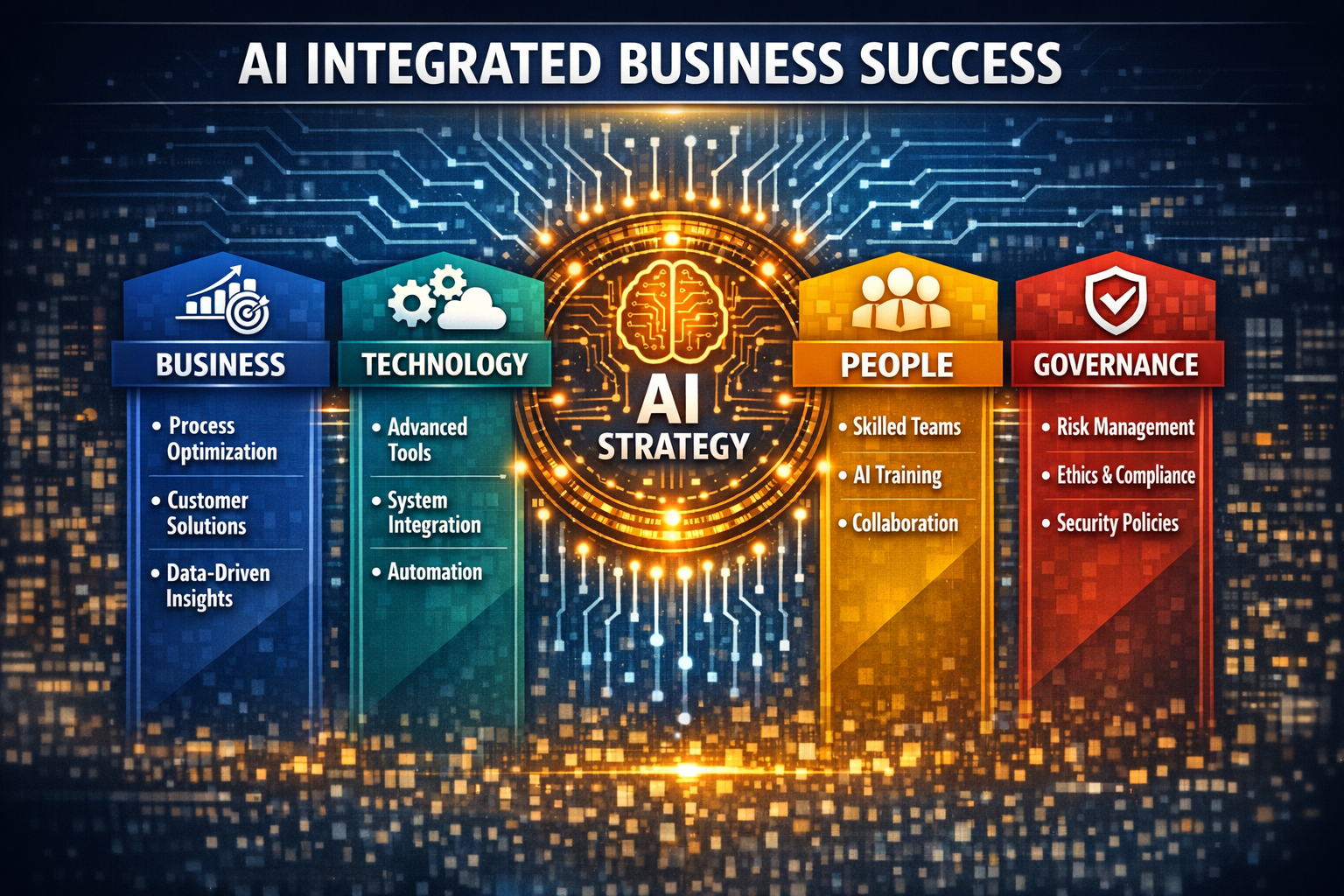
How Powersoft uses AI to sharpen proposals, strengthen architecture decisions and improve communication - amplifying expertise rather than replacing it.
Artificial intelligence has moved far beyond theory. It’s no longer a futuristic idea sitting on the horizon
It’s becoming a practical partner in how we design, build, and deliver software every day. At Powersoft, our focus isn’t on chasing hype cycles or adopting technology for its own sake. What matters to us is how AI strengthens clarity, accelerates decision‑making, and elevates the quality of the work we deliver.
Over the past year, we’ve integrated AI into the parts of our workflow where it genuinely adds value. It helps us refine proposals so they’re sharper and easier to understand. It supports the structuring of complex systems, ensuring architectural decisions are consistent and well‑reasoned. And it enhances communication; turning technical depth into language that clients can act on with confidence.
But here’s the important part: AI isn’t replacing expertise. It’s amplifying it.
Our teams bring decades of domain knowledge, architectural discipline, and problem‑solving experience. AI simply gives us a clearer lens. It helps us explore options faster, validate assumptions earlier, and maintain precision even in the most demanding projects. For organisations navigating modernisation, this combination; human judgement supported by intelligent tools; is proving incredibly powerful.
As we continue integrating AI into real‑world delivery, the opportunity becomes even clearer. Smarter workflows. Stronger outcomes. More time spent on the work that truly requires human insight. And a future shaped not by automation for automation’s sake, but by thoughtful innovation that respects the craft of building software that lasts.
AI is becoming part of how we work, not as a replacement, but as a multiplier. And that’s where its real value lies.
15th March 2026
PowerBuilder remains a powerful, stable platform, but skilled developers are increasingly rare. Structured, specialist support is what keeps mission-critical systems stable.
PowerBuilder has earned its reputation over decades: a powerful, stable, and deeply capable platform that continues to run mission‑critical systems around the world. The technology itself isn’t the challenge; the real pressure point today is expertise.
Skilled PB developers are becoming increasingly rare. Many organisations underestimate just how much knowledge, business logic, and operational stability is embedded in their long‑standing systems. When those systems need support or modernisation, the gap isn’t in the tooling. It’s in finding people who understand how to work with it properly.
That’s why structured, specialist support matters more than ever. Modernisation isn’t simply a technical upgrade. It’s about protecting the logic that keeps the business running. It’s about stabilising operations, reducing risk, and ensuring continuity while planning for the future. The organisations that succeed are the ones that approach PB with clarity, not panic, and surround themselves with the right guidance.
At Powersoft, we’ve seen firsthand how curated resources, practical insights, and experienced partners can transform the experience of maintaining or evolving PB systems. When teams have access to credible advice and a clear roadmap, complexity becomes manageable. Decisions become informed. And systems that have served the business for years can continue to do so with confidence.
PowerBuilder’s future isn’t defined by the age of the platform, but by the quality of the expertise supporting it. By sharing what we’ve learned and helping teams navigate their modernisation journey, we’re ensuring that mission‑critical systems remain strong, stable, and ready for whatever comes next.
28th February 2026
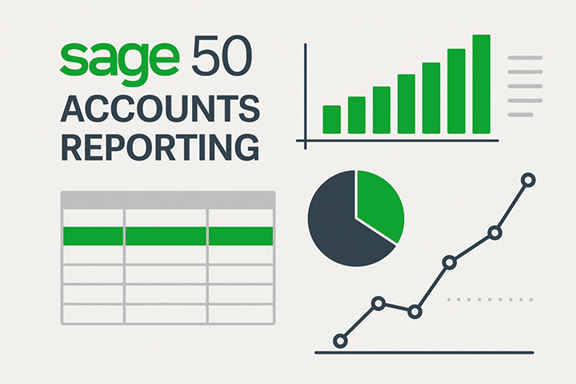
A flexible, spreadsheet-style reporting module that frees Sage 50 users from rigid, numeric-order reports and turns raw data into decision-ready insight.
For many businesses, Sage 50 is a reliable financial backbone. But its reporting limitations have always made it harder to see the full story behind the numbers. Standard Sage reports lock accounts into numeric order, fixed groupings, and rigid totals that rarely match the way organisations actually analyse performance. The result is familiar: workarounds, manual spreadsheets, and time spent reshaping data instead of understanding it.
Our Sage 50 Reporting module changes that completely. We’ve replaced those long‑standing constraints with a flexible, spreadsheet‑style reporting layer that gives you full control over how your financial information is organised, grouped, and presented. Instead of forcing your accounts into Sage’s structure, you can shape reports around the way your business thinks.
Want custom categories? Clearer summaries? A layout that mirrors your internal processes rather than a predefined template? This module makes it possible and effortless.
By giving teams the freedom to design reports that reflect real‑world decision‑making, we turn Sage 50 data into meaningful, decision‑ready insight. It’s not just better reporting; it’s a smarter way to understand your business.
15th February 2026
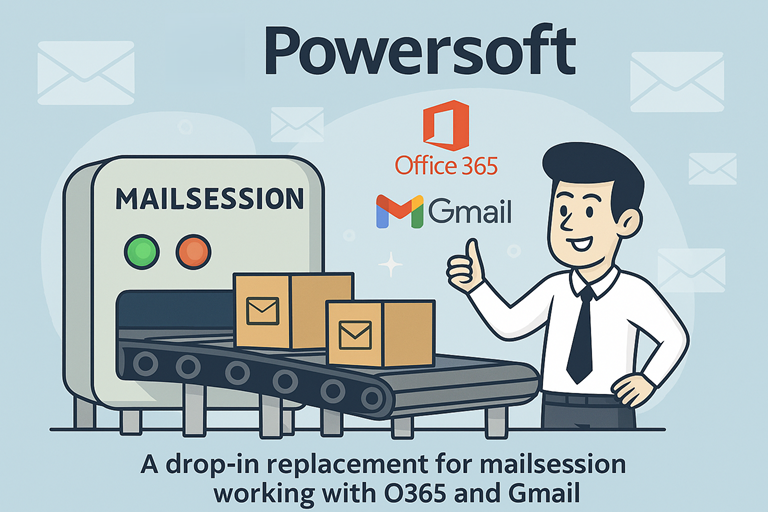
As Office 365 and Gmail retire legacy protocols, PowerBuilder applications need a modern, API-based replacement for MAPI to keep email workflows stable and secure.
For years, many PowerBuilder applications have relied on legacy MAPI integrations to send emails, generate notifications, and support workflow automation. But as platforms like Office 365 and Gmail continue to retire traditional mail protocols, organisations are discovering just how fragile those old dependencies have become. What once “just worked” is now a source of instability, authentication failures, and unpredictable behaviour.
Replacing MAPI isn’t simply a technical upgrade; it’s a resilience strategy.
Modern systems need secure authentication, consistent performance, and integration patterns that align with today’s email providers. That means moving away from outdated desktop‑bound APIs and adopting direct, service‑level communication with platforms such as Office 365, Gmail, and other hosted email services.
Our PowerBuilder MAPI Replacement module does exactly that.
By connecting directly to the email provider’s API, it delivers a stable, future‑proof alternative that supports modern authentication, predictable message handling, and seamless integration with existing PB workflows. No more dependency on local mail clients. No more brittle COM calls. No more uncertainty.
We’ve built clear guidance, reusable components, and practical migration patterns that allow teams to transition without disrupting business operations. The goal is simple: keep email‑driven processes running smoothly while removing the risk that legacy MAPI introduces.
For organisations with long‑standing PowerBuilder systems, this shift isn’t optional; it’s essential. With a modern API‑based approach, you gain reliability, security, and confidence that your application will continue to operate as expected in a rapidly changing email landscape.
5th January 2026
An enhanced Sales Order Processing module that adapts Sage 50 to bespoke pricing, multi-stage approvals and sector-specific order logic - not the other way around.
For many organisations, Sage 50 is a solid foundation for managing accounts; but its standard Sales Order Processing workflow often struggles to keep up with the realities of modern operations. As businesses grow, pricing becomes more complex, order rules become more specific, and industry‑driven processes demand more flexibility than Sage’s out‑of‑the‑box SOP can offer.
That’s where our enhanced SOP module makes the difference.
Instead of forcing your team to work around rigid templates, we extend Sage 50 with a tailored SOP layer designed to match the way your business actually operates. Custom screens, automated checks, integrated quoting, and streamlined order handling all come together to create a workflow that feels natural, efficient, and reliable.
Whether you’re dealing with bespoke pricing structures, multi‑stage approvals, or sector‑specific order logic, this module adapts to your processes; not the other way around.
The result is simple: faster order processing, fewer errors, and a smoother path from quote to invoice. By shaping SOP around your real‑world operations, we help your team work with confidence and keep orders moving without friction.
1st January 2026
An introduction to Powersoft's blog, sharing real-world insight on PowerBuilder modernisation, Sage integration, AI strategy and the decisions behind long-standing systems.
Welcome to the Powersoft Blog: a space for ideas, clarity, and honest conversations about the realities of modern software development. After decades of working with organisations across industries and continents, we’ve learned that the best insights come from real projects, real challenges, and the practical decisions teams make every day.
That’s exactly what this blog is here to explore.
Over the coming months, we’ll be sharing thoughts, guidance, and behind‑the‑scenes perspectives drawn from the work we do: PowerBuilder modernisation, Sage integration, AI strategy, workflow design, and the countless technical puzzles that shape long‑standing systems. Some posts will be strategic, others deeply technical, and many will sit somewhere in between; but all will be grounded in real‑world experience.
Our goal is simple: share what we know, learn from the community, and keep important conversations moving forward. If you’re navigating legacy systems, planning modernisation, or just curious about the thinking behind our work, you’re in the right place.
Here’s to the discussions ahead — and to building software that lasts.